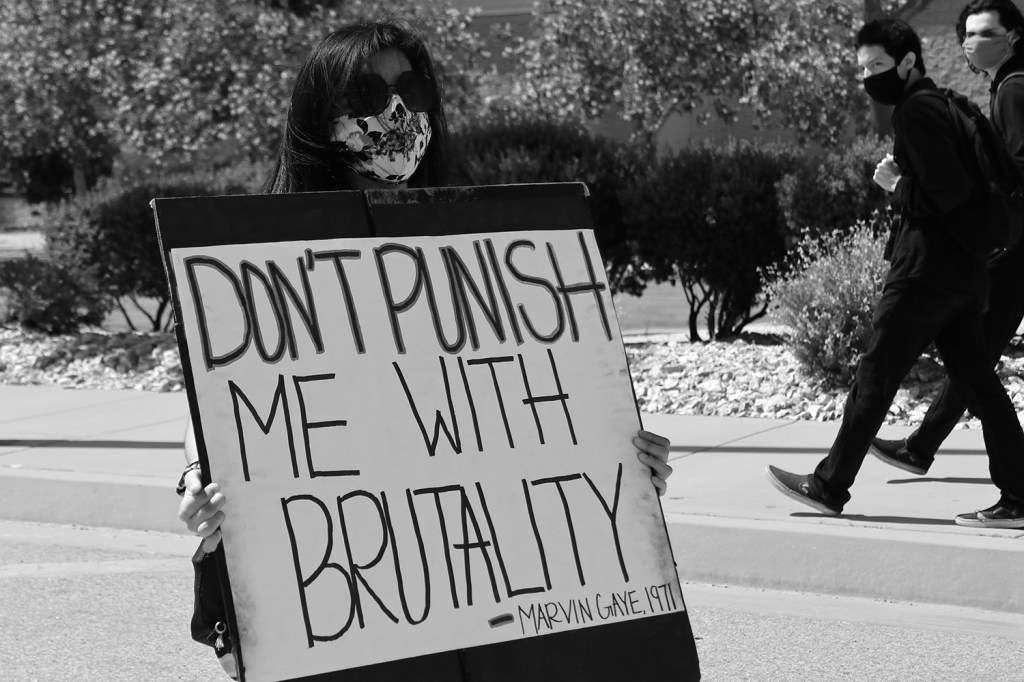
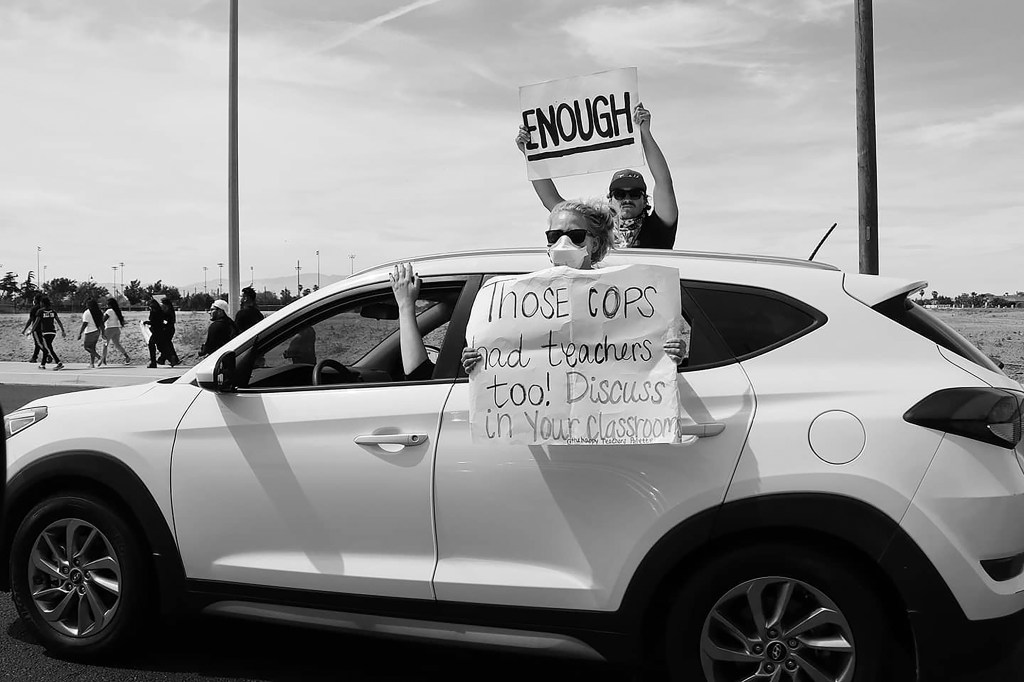
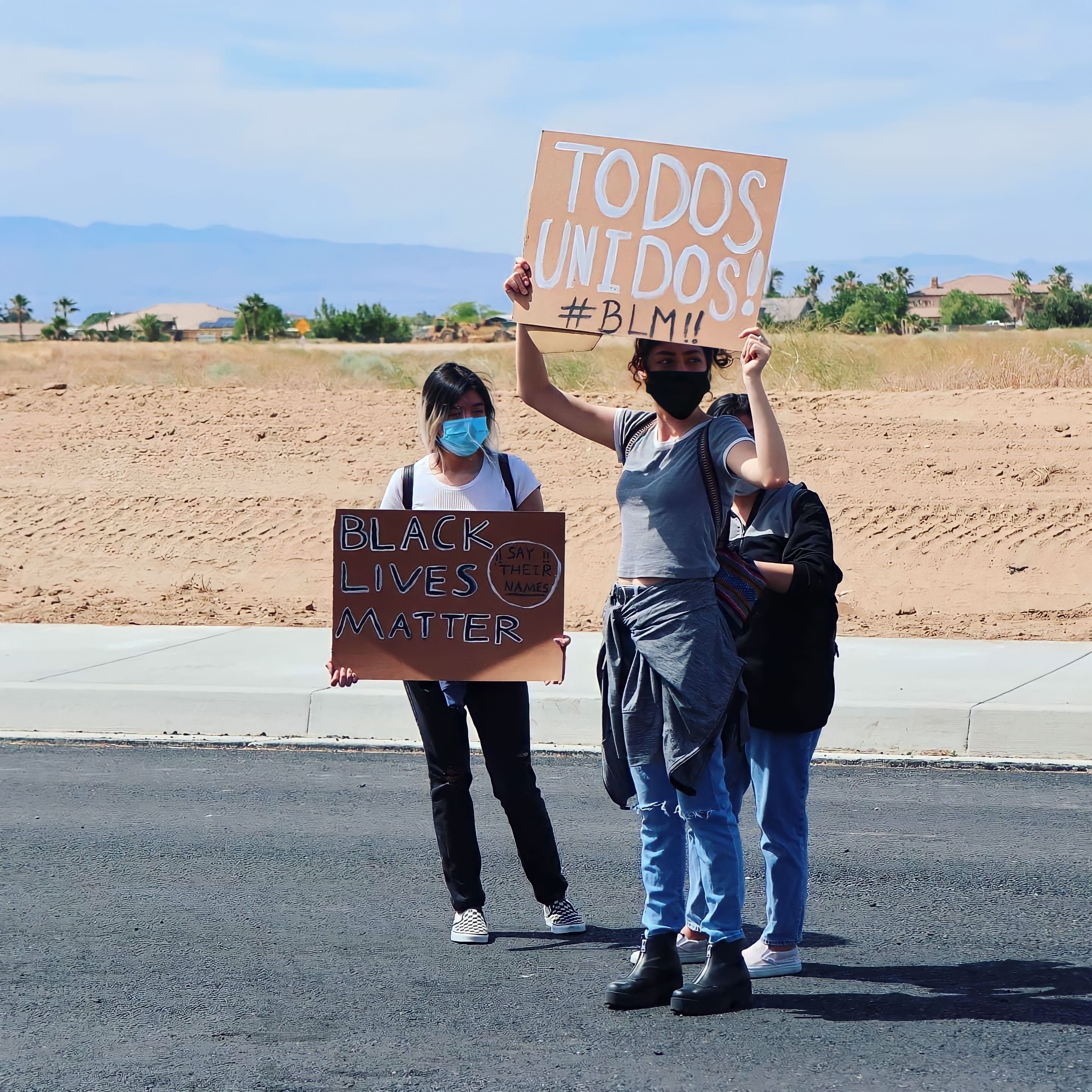
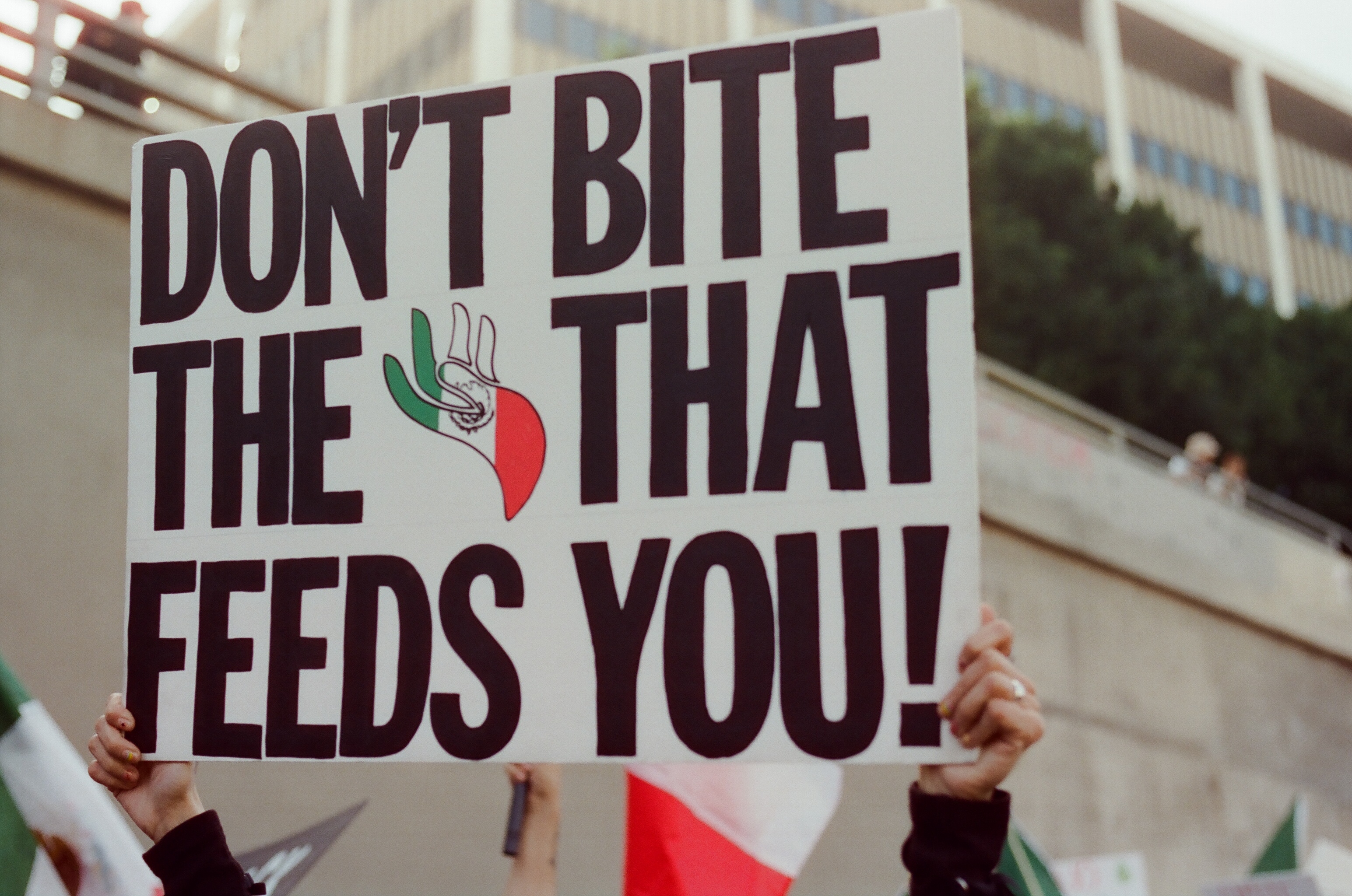
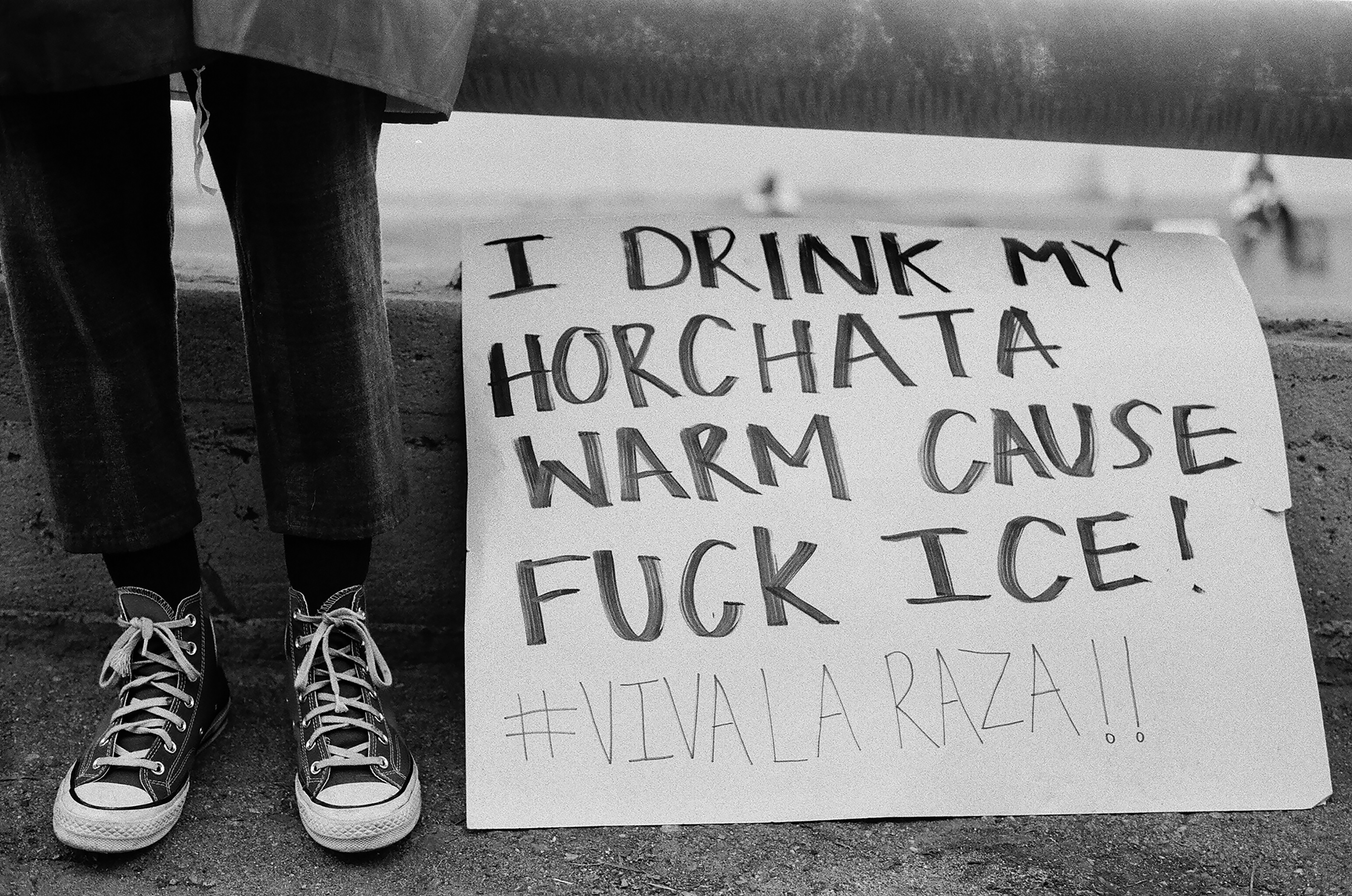
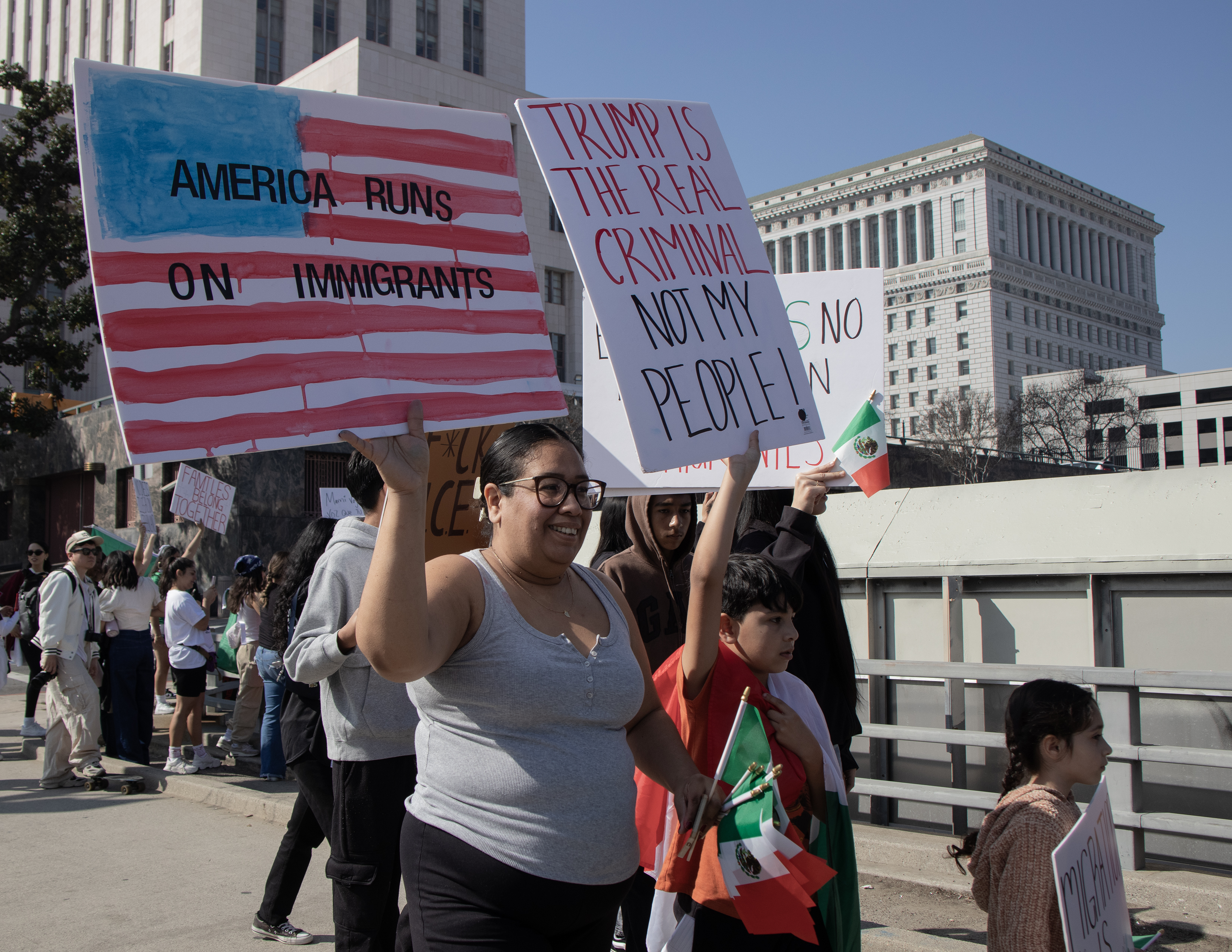
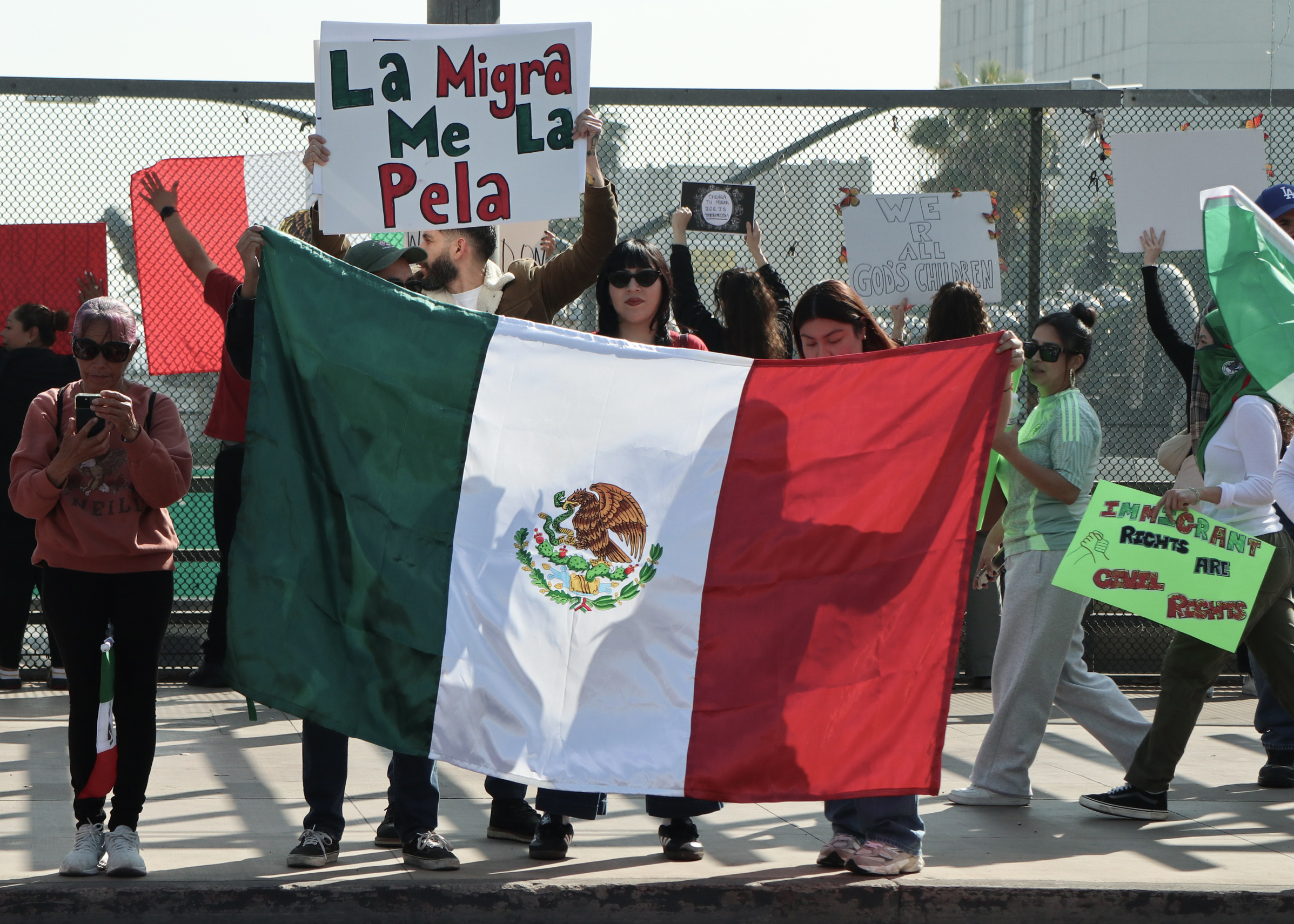
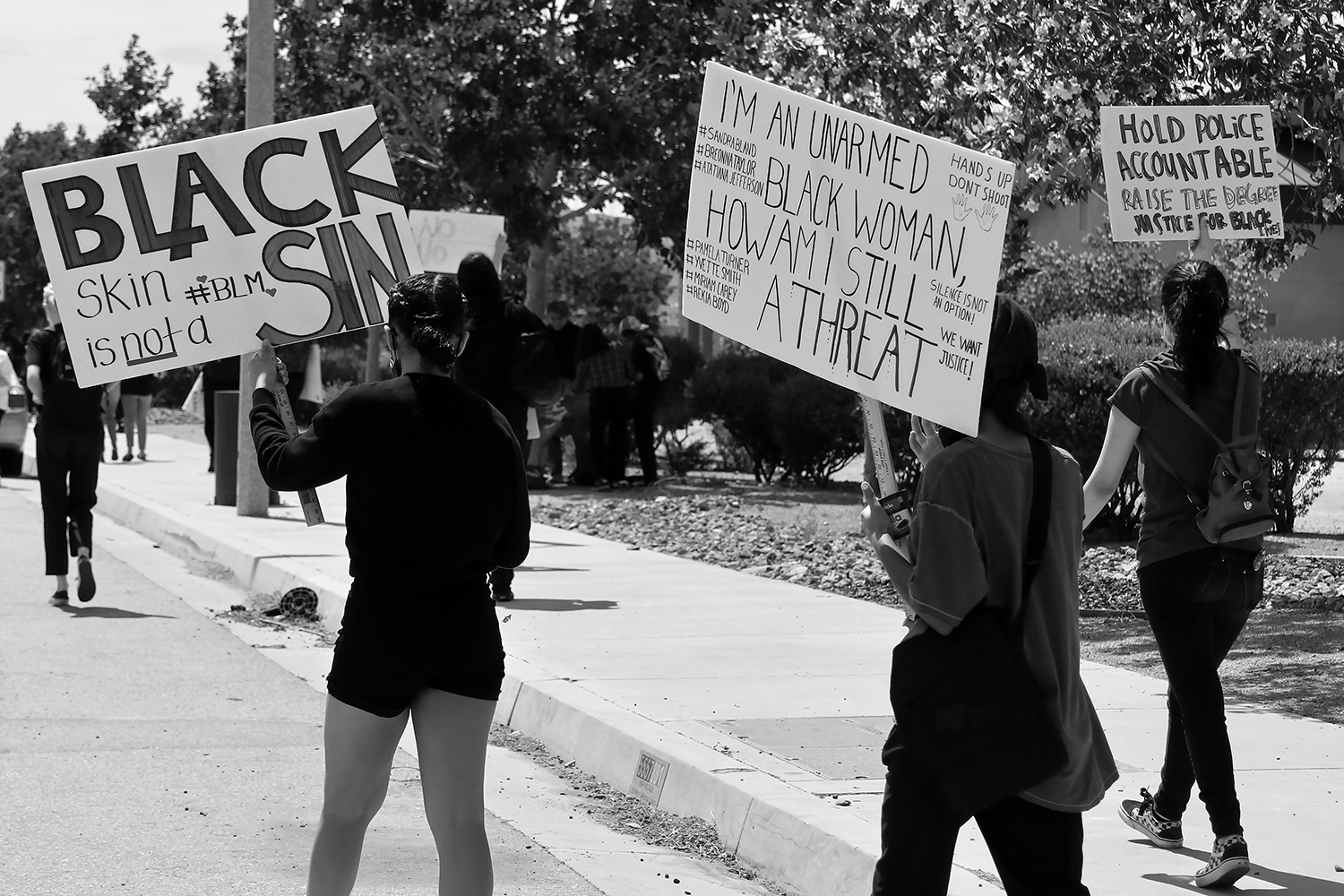
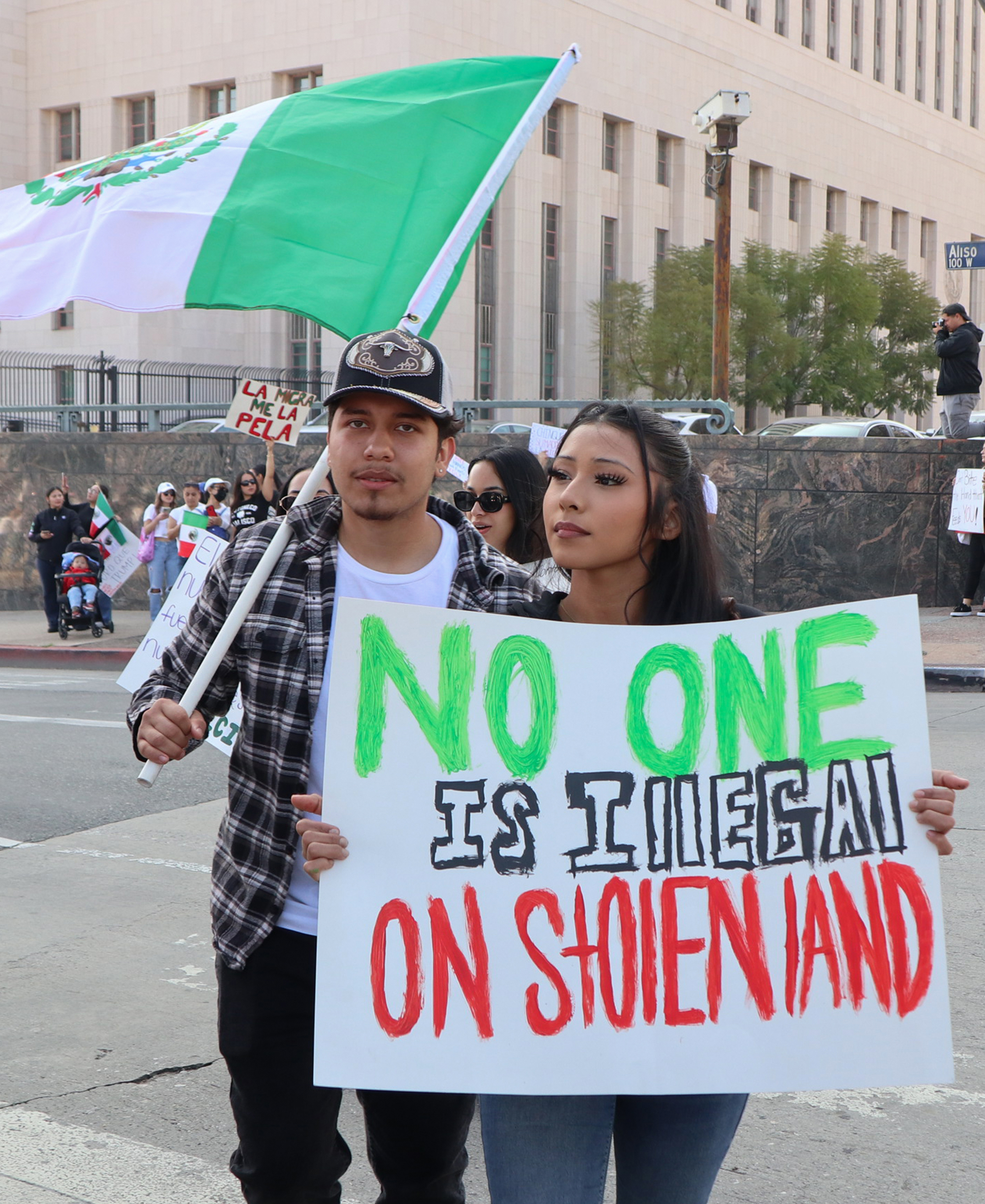
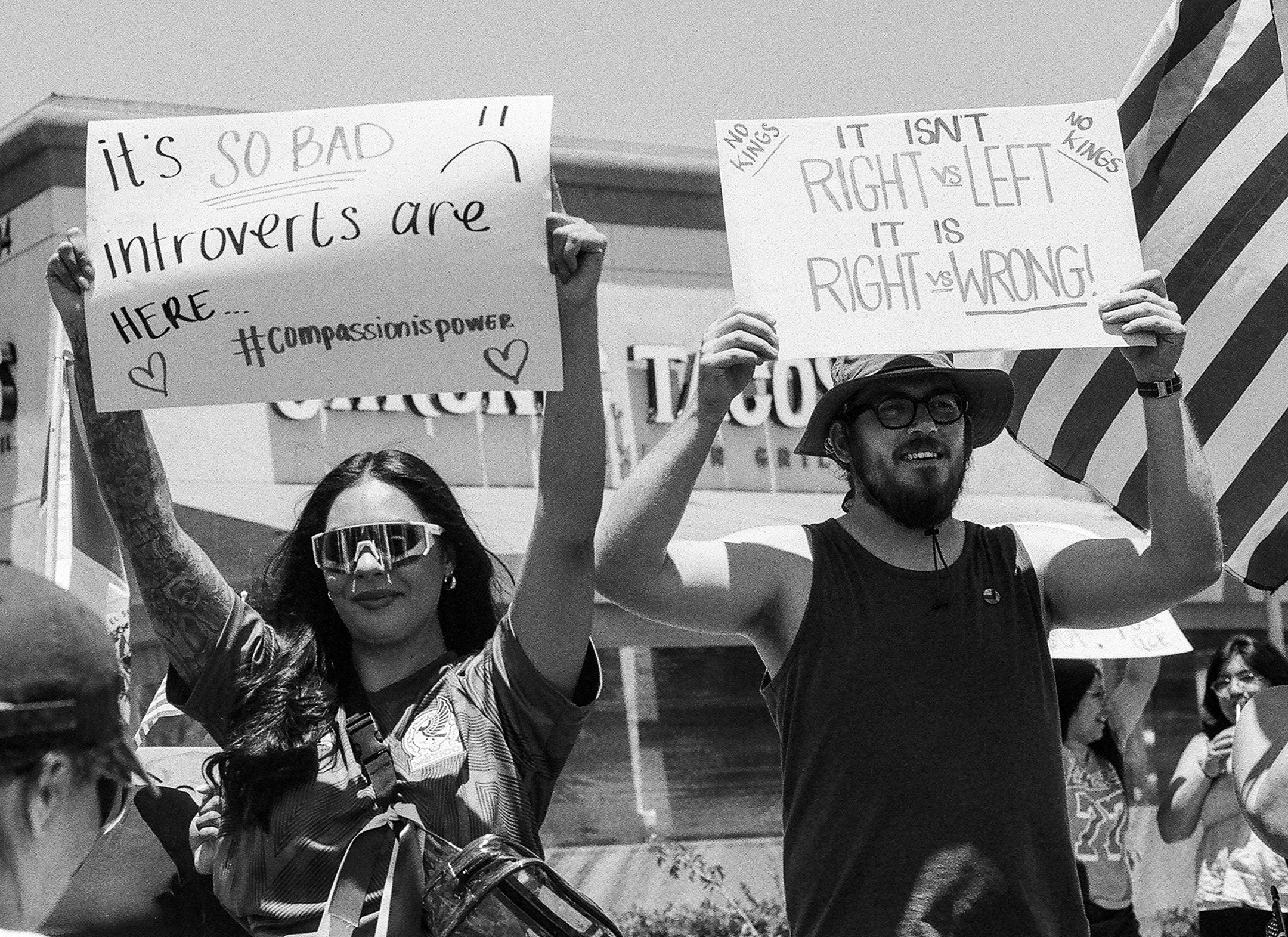
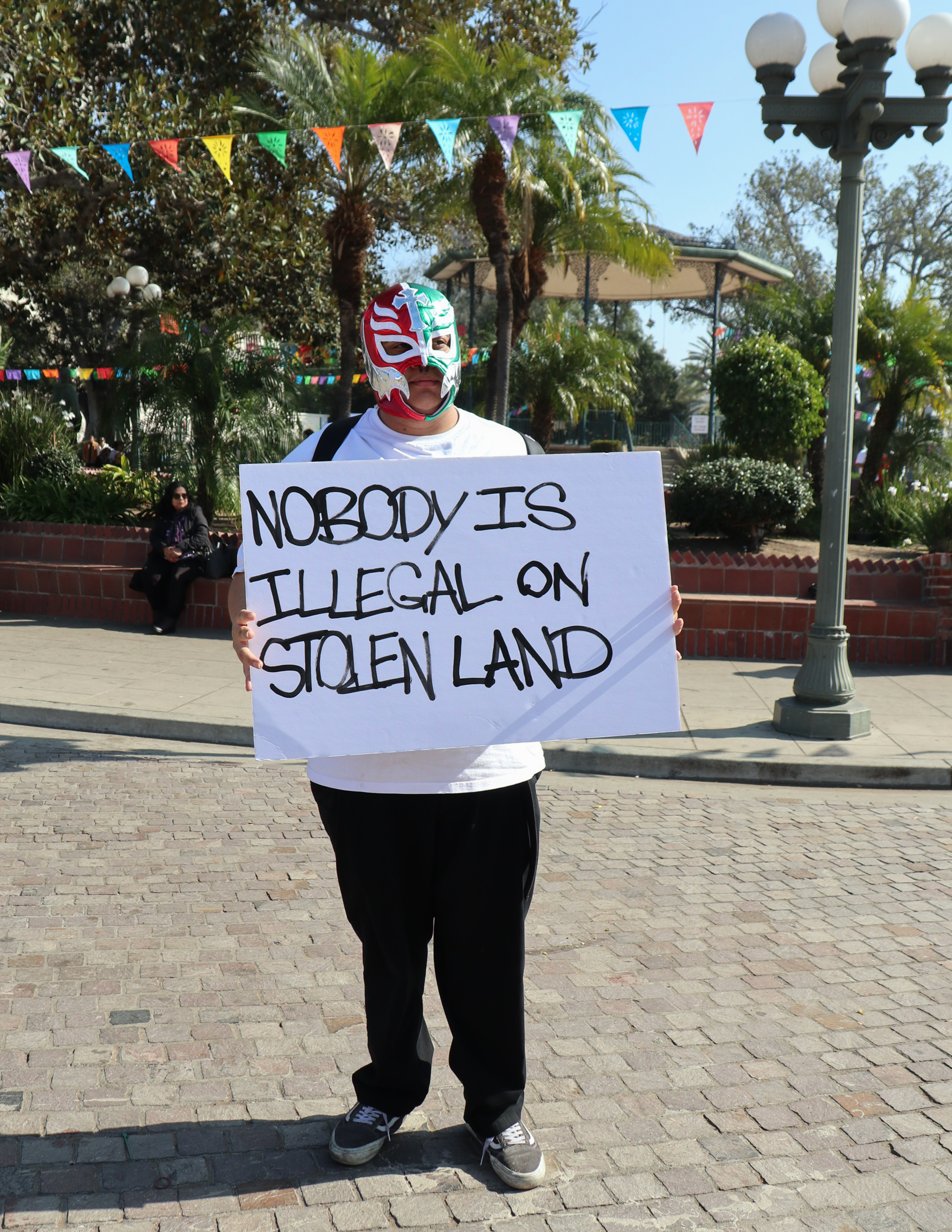
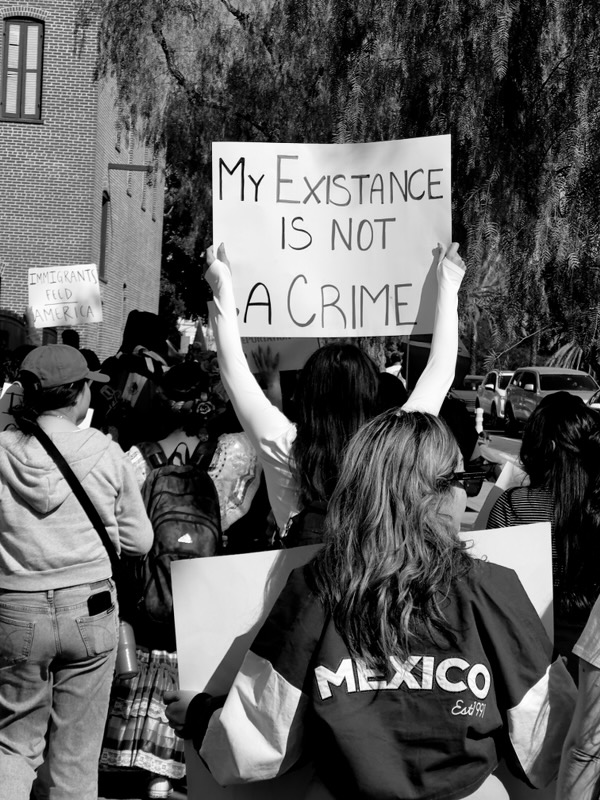
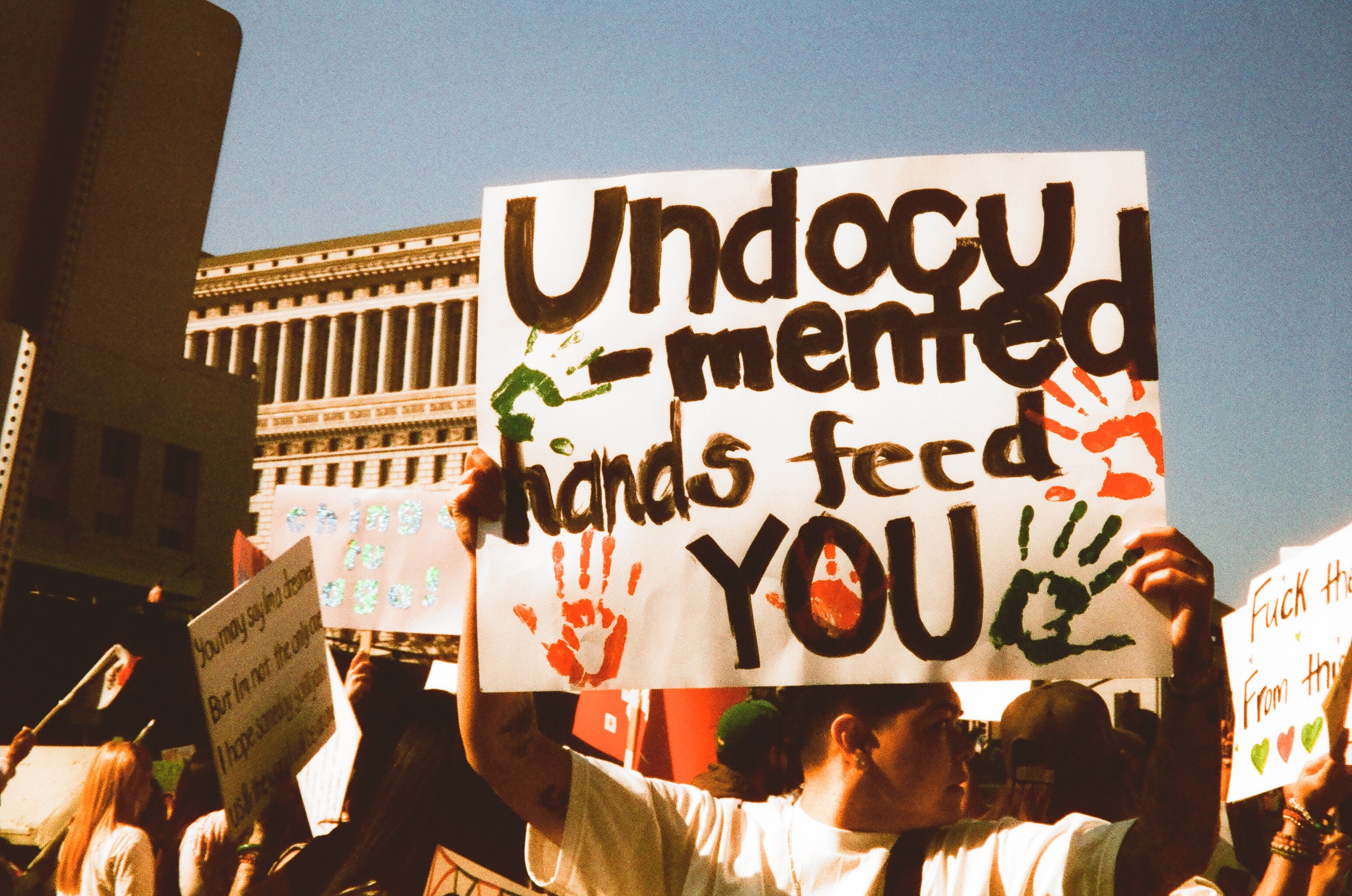
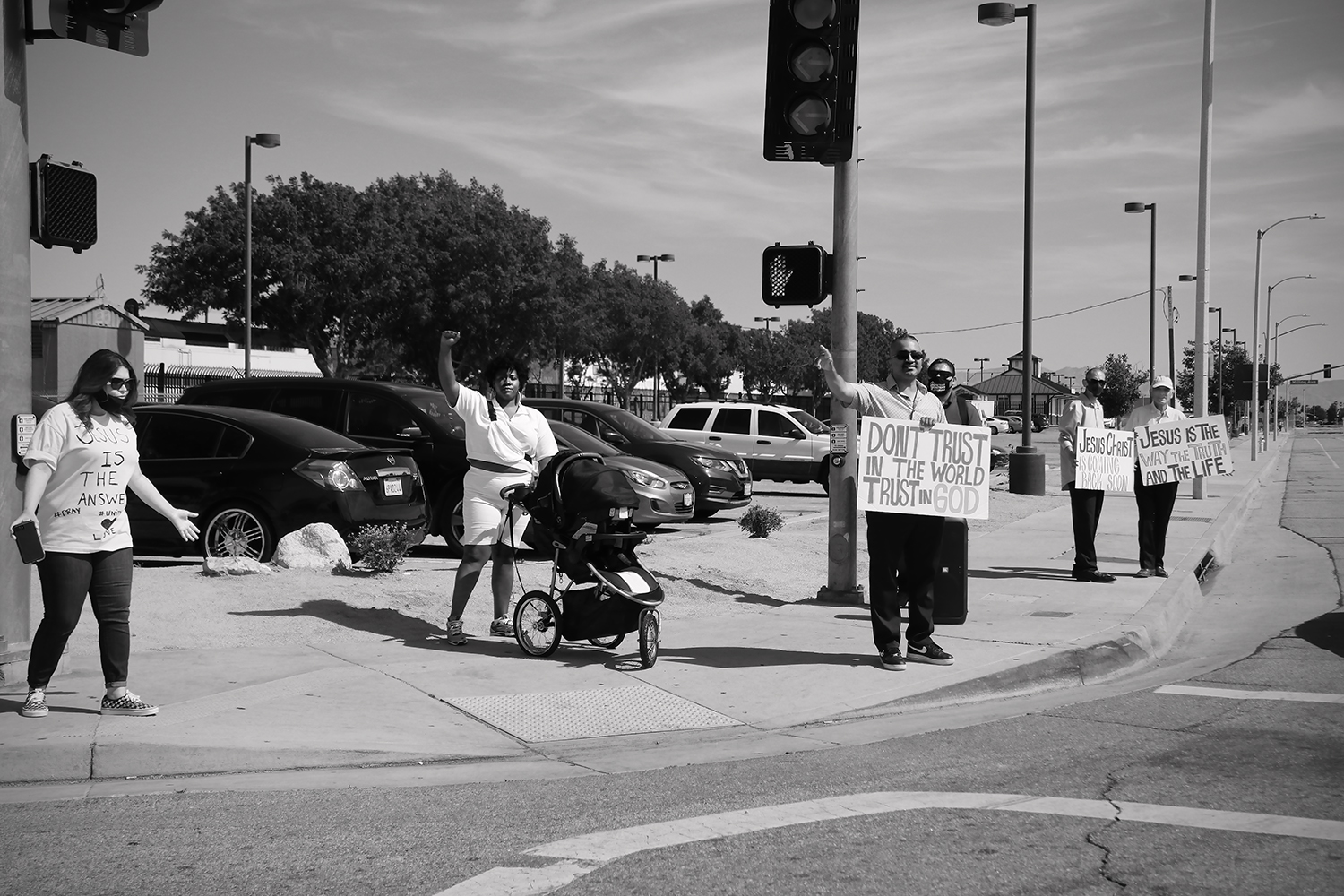
Cardboard Voices is an installation composed of photographs taken at different protests in the state of California that have been intertwined with textiles from different countries, such as Guatemala and Mexico, as well as ribbon work from China and India, to honor the voices of immigrants who have been taken by ICE. This work focuses on the absences created through unfinished textiles and images that highlight the visible gaps and frustration within our communities as families and communities are torn apart. The 3D installations highlight the profound contributions of difficult labor industries that immigrants take part in while putting their bodies on the line to build the foundations of this country, such as agriculture, textiles, and construction.
The photographs were taken at multiple protests as documentation while also offering testimony and a collective witnessing of injustice. They embody the constitutional right to freedom of speech. By placing all the images on a central wall, they create a visual chorus that asserts the message that the people’s voices do matter, while allowing the viewer to immerse themselves in the work. The protests represented here serve as a living check and balance against injustice, revealing how civic engagement becomes an essential form of resistance.
Textiles from Mexico and Guatemala are interwoven throughout the installation, carrying ancestral knowledge, cultural identity, and generational memory. Cloth becomes both protection and proclamation—soft yet enduring, intimate yet political. The materiality of thread echoes the interconnectedness of immigrant communities whose labor and care sustain the social and economic fabric of this nation.
A central motif within the installation references the “Three Sisters”—corn, beans, and squash—an Indigenous agricultural practice rooted in mutual support and sustainability. Each crop nourishes and strengthens the others: corn provides structure, beans restore the soil, and squash protects the ground. Together they thrive where one alone could not. This agricultural philosophy mirrors the role of immigrants in this country: diverse, interdependent, and foundational to collective success. Their labor supports industries, feeds communities, and builds infrastructure, much like the Three Sisters sustain one another.
Cardboard Voices asks viewers to consider absence as presence; to recognize the hands that cultivate, stitch, and construct, especially when those hands are violently removed. It insists that dignity, labor, and voice are inseparable. Through documented imagery, textiles, and shared experience, the work affirms that justice requires visibility, as the strength of our nation is rooted in both historical and current contributions from hardworking people that often go unseen. Their voices matter, their lives matter, and they deserve freedom and dignity.
(I share just a few pieces of the documentation work that I have been able to cover as it is my belief that it is all of our responsibility to preserve these moments any way possible, so that erasure is not an option.)

